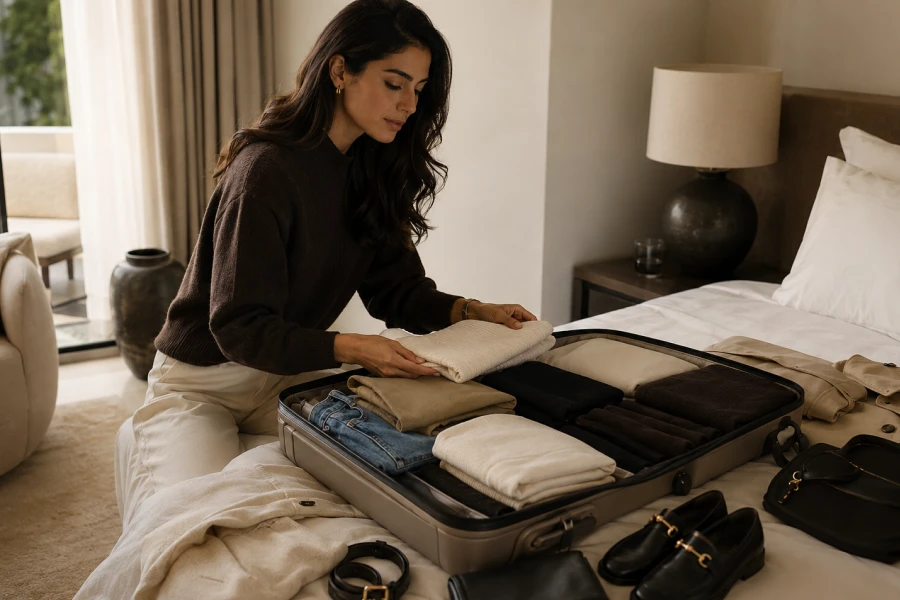
A capsule wardrobe for a month long trip needs to balance flexibility, comfort, and style without filling every inch of luggage. Long travel makes weak packing choices obvious very quickly. Pieces must repeat well, layer easily, and handle different settings. A dinner outfit may need to work with the same shoes used for sightseeing. A light jacket may need to suit cool mornings and casual evenings. The best packing plan starts with a color palette, then builds around repeatable formulas. It is not about wearing the same outfit for thirty days. It is about creating enough variety from fewer, smarter pieces.
A focused palette makes every travel outfit easier to assemble. Choose two base colors, one soft neutral, and one accent if needed. Black, white, denim, and tan work well for many cities. Navy, cream, gray, and olive create a softer mood. The palette should suit your destination, activities, and personal style. A smart packing system keeps the color story practical. It also prevents impulse items from taking over your suitcase. When every piece connects, outfit planning becomes faster. Travel feels lighter because your closet travels with intention.
Start with your real itinerary, not an imaginary version of yourself. Count travel days, walking days, dinners, work moments, beach time, weather shifts, and laundry access. Each activity needs clothing that performs well. Comfortable shoes matter more than novelty. Layers matter more than bulky extras. A travel outfit planner can help connect pieces to specific situations. This prevents overpacking for rare possibilities. It also protects the outfits you will actually wear. Good packing feels realistic. It reflects your trip, your body, and your daily pace.
A month away usually needs more strategy than more clothing. Begin with three bottoms, five tops, two layers, one dress or elevated one-piece, and two shoe categories. Add destination-specific pieces only when necessary. Lightweight fabrics are easier to wash and repeat. Wrinkle-resistant items earn extra value. A blazer, cardigan, or overshirt can change the mood of basics quickly. The best pieces can move between casual and polished settings. Avoid items that only work once. Space is too valuable. Every piece should support several outfits. That rule keeps the suitcase useful and controlled.
Weather can change the smartest plan. Layers solve this better than bulky single-use items. Pack a light base, a warm middle layer, and an outer layer suited to the destination. A thin merino sweater, button-down shirt, and packable jacket can cover many conditions. Scarves and socks add warmth without consuming much space. A month away wardrobe should also consider laundry speed. Heavy denim and thick cotton may dry slowly. Technical blends can help. Natural fibers can feel better. The right mix depends on climate and comfort.
Shoes can make or break long-trip packing. They take space, add weight, and affect every day’s comfort. Choose one walking shoe, one polished shoe, and one optional destination-specific pair. Sneakers can look refined when the rest of the outfit feels intentional. Loafers, flats, sandals, or ankle boots can handle dinners and city days. Avoid packing shoes that require a very specific outfit. They rarely earn their place. Test every pair before the trip. New shoes can ruin a beautiful itinerary. Comfort should not be negotiated. Style works best when your feet survive the day.
Outfit formulas make a small suitcase feel bigger. Try a tee with trousers and sneakers for daytime. Add a blazer and jewelry for dinner. Pair a button-down with denim, then wear it open over a tank the next day. Use one dress with sandals, boots, or a layer depending on weather. This method creates variety through styling, not volume. Photograph combinations before packing. Then remove anything that does not support several looks. The process may feel strict at first. It becomes freeing once you see how many outfits already exist.
Long trips require honest laundry planning. If laundry is available weekly, you can pack much less. If not, breathable fabrics and quick-dry pieces become more important. Rewearing looks better when accessories and layers change. A scarf, belt, jacket, or shoe swap can shift the mood. Neutral colors also hide repetition because outfits feel cohesive, not identical. Pack a small laundry bag and travel detergent if needed. Plan rest days for washing. This small habit keeps the wardrobe fresh. It also prevents emergency shopping, which often creates regret and wasted suitcase space.
Lay every item on the bed before packing. Build at least fifteen outfits from the pieces in front of you. If one item does not connect, remove it. If two items serve the same role, choose the better one. Check the weather again. Confirm shoes, layers, and laundry plans. Add accessories last, not first. They should finish outfits, not compensate for weak ones. The final suitcase should feel calm and useful. A month away becomes easier when clothing supports the trip instead of complicating it. Smart packing creates more room for the actual experience.

Leave a comment