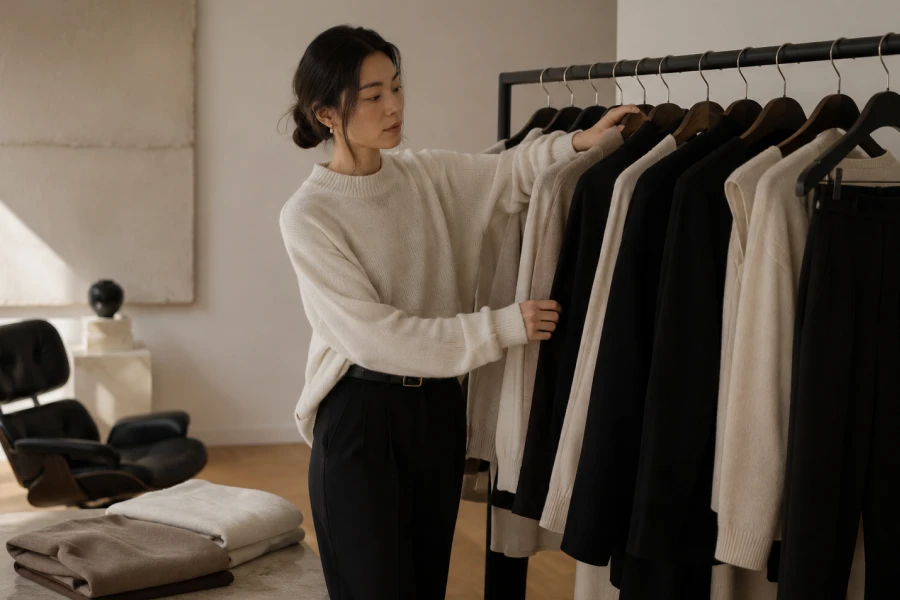
A monochrome capsule wardrobe gives personal style a clear structure without making outfits feel restricted. It works because fewer colors create more useful combinations. Instead of chasing every seasonal trend, you build around shades that support your lifestyle. This makes dressing quicker, shopping easier, and packing more efficient. A tonal closet also looks calmer, which helps you see what you actually wear. The pieces begin to relate to each other visually. A black blazer works with black denim, charcoal trousers, and a soft gray knit. A camel coat supports beige, cream, tan, and espresso. The wardrobe feels edited, but still flexible.
A capsule does not need to be tiny. It needs to be purposeful. A monochrome version uses one main color family and several nearby shades. That gives you range without visual confusion. You can still include prints, denim, leather, and metal accents. The key is keeping the dominant mood consistent. A tonal closet edit helps you identify which pieces earn their space. It also reveals duplicates that do not serve you. When color is simplified, quality becomes easier to judge. You notice fit more clearly. You shop with sharper standards.
Decision fatigue is one of the biggest style problems. Too many unrelated colors create too many weak combinations. A narrow palette solves that quickly. Tops, bottoms, shoes, and outerwear begin to coordinate with less effort. You can get dressed while half-awake and still look intentional. This matters on work mornings, travel days, and rushed weekends. The system also reduces emotional shopping because every purchase must fit the color story. A minimalist fashion plan supports better choices. You spend less time experimenting badly. You spend more time repeating what already works beautifully.
The easiest capsule begins with the color you already reach for most. That choice is usually more honest than any trend forecast. Look at your laundry pile, favorite shoes, daily bag, and most-used coat. Patterns will appear quickly. If black dominates your closet, build around black, charcoal, smoke, and soft white. If beige feels natural, explore cream, sand, camel, taupe, and brown. Navy can connect with denim, slate, ivory, and midnight blue. Choose a base that suits your life, not someone else’s mood board. Personal style grows faster when it starts from real habits.
Strong capsules need reliable categories. Start with two bottoms, three tops, one jacket, one knit, one dress or jumpsuit, and two shoe options. Then add layers based on weather and lifestyle. Each piece should create at least three outfits. This prevents beautiful but isolated purchases from weakening the system. A versatile wardrobe foundation makes every item easier to justify. Pay attention to fabric, neckline, waist placement, and shoe compatibility. These details matter more when color is quiet. The best pieces do not shout. They keep showing up.
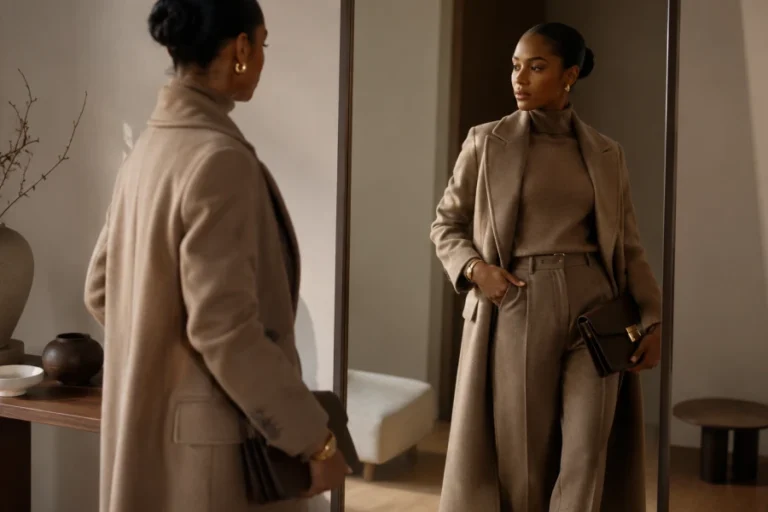
Monochrome does not require identical shades. In fact, exact matching can sometimes look too rigid. Controlled contrast makes the wardrobe more wearable. A white shirt under a cream cardigan still belongs. Black loafers with charcoal trousers still feel tonal. Espresso boots can deepen a camel outfit. The trick is staying within a related temperature. Warm colors should mostly stay warm. Cool colors should mostly stay cool. Contrast can also come through texture, not color. Ribbed knits, brushed wool, polished leather, and crisp poplin create movement. A quiet palette becomes richer when surfaces interact.
Travel exposes weak wardrobes quickly. If pieces cannot mix, luggage becomes heavy and frustrating. A monochrome capsule solves that problem because almost everything works together. One jacket can serve several outfits. One pair of shoes can support day and night looks. Accessories feel more intentional because the palette stays consistent. Laundry planning also becomes easier. You can rewear pieces without the outfits looking identical. This is especially useful for long weekends, work trips, and city vacations. The result is lighter packing with better style payoff. You bring fewer things, but create more combinations.
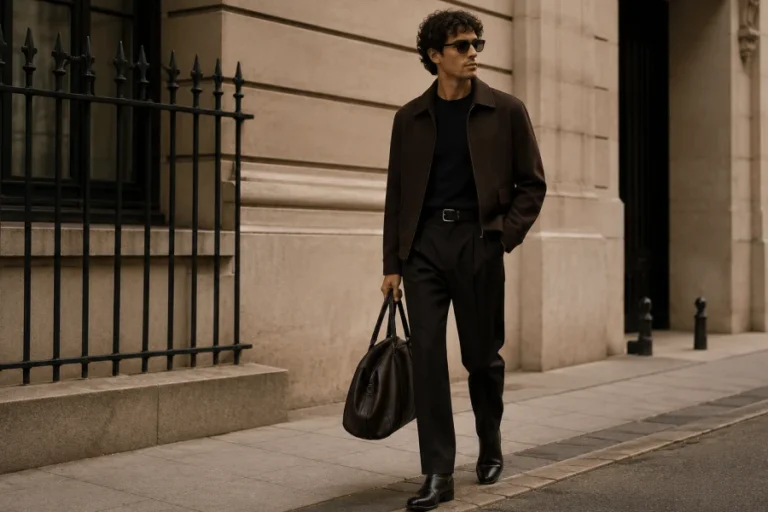
The main risk is not simplicity. It is sameness. A capsule becomes dull when every piece has the same texture, shape, and level of formality. Balance soft and structured items. Mix slim shapes with relaxed ones. Add one standout coat, one great shoe, or one beautiful bag. Jewelry can shift the mood without changing the color story. Belts, scarves, and sunglasses also help. Think about contrast in weight and finish. A cotton tee needs something sharper nearby. A tailored trouser can relax with a knit. The wardrobe stays minimal, but the outfits stay alive.
A monochrome wardrobe becomes stronger with seasonal review. At the end of each month, notice which pieces worked hardest. Keep the reliable items visible. Remove anything that fights the palette or fits poorly. Create a short shopping list from actual gaps, not imagined needs. Replace worn basics before adding novelty. This keeps the system practical and beautiful. Over time, your closet becomes easier to maintain. Your style also becomes more recognizable. Instead of starting over each season, you refine what already works. That is the quiet power of dressing with discipline and taste.


Leave a comment