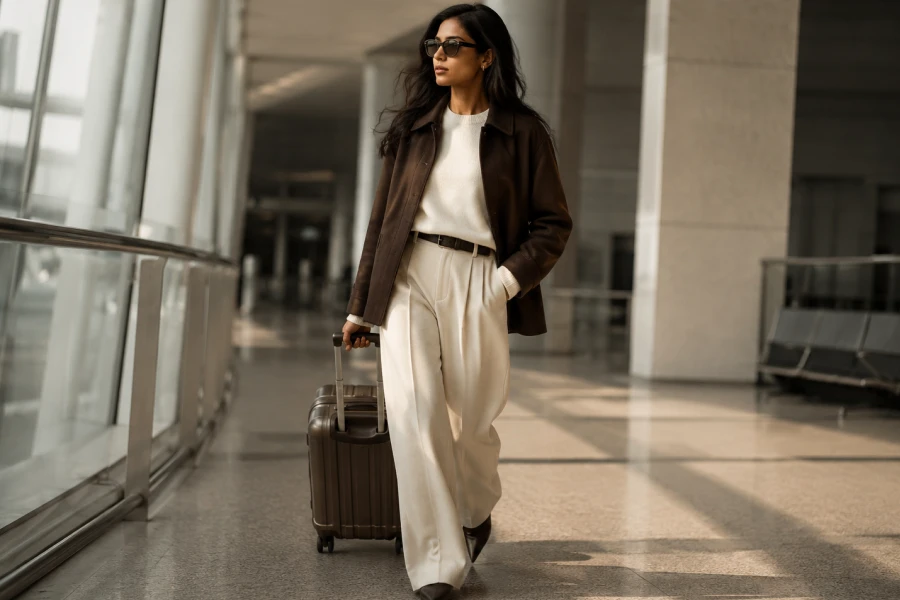
A month away packing list should feel practical, stylish, and honest about how people actually travel. Long trips can tempt you to pack for every possible version of yourself. That usually creates a heavy suitcase and too many unused pieces. A better list begins with repeatable outfits, comfortable shoes, and layers that solve real weather problems. It also considers laundry, destination style, and daily energy. The goal is not to own a perfect travel wardrobe. The goal is to bring enough without carrying your entire closet. When the list works, mornings feel easier. You can focus on the trip, not the suitcase.
Your itinerary should control the suitcase. A city month needs different pieces than a coastal month. A work trip needs different polish than a family visit. Count the days that require walking, dining out, working, relaxing, exercising, or dressing up. Then choose clothing based on those numbers. A long trip packing method prevents fantasy outfits from stealing space. It also makes your wardrobe more useful day after day. Planning this way may feel less glamorous. In practice, it creates better outfits and fewer travel frustrations.
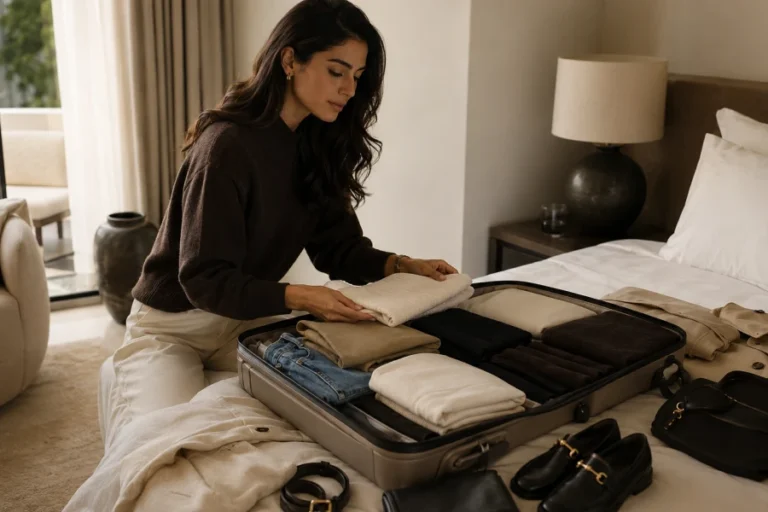
Most travelers can begin with a simple framework. Pack three to four bottoms, six to eight tops, two layers, one polished outfit, sleepwear, undergarments, and weather-specific extras. Add activewear only if you will really use it. Choose pieces that share a color palette. This makes mixing easier and reduces the need for extra shoes. A capsule travel wardrobe supports this structure beautifully. It gives every piece multiple jobs. That matters when luggage space is limited and daily plans keep changing.
Accessories should solve problems, not create clutter. Choose one comfortable walking shoe and one more polished option. Add sandals, boots, or weather shoes only if the destination requires them. Bags should also match your plans. A crossbody works for sightseeing. A tote helps with work, markets, or travel days. Jewelry should be simple and easy to repeat. A scarf can add warmth, color, and outfit variety. Avoid packing accessories that only match one look. They may feel exciting at home, but they rarely serve a long trip well. Versatility should win every time.
Laundry access changes everything. If you can wash clothes weekly, your list can stay much smaller. If laundry is uncertain, prioritize breathable fabrics and pieces that air out well. Pack travel detergent, a stain remover, and a small laundry bag. Choose darker bottoms if spills are likely. Bring tops that can be layered or reworn in different ways. A travel style plan makes rewearing feel intentional instead of repetitive. Clean organization also helps. Separate worn items quickly. Refresh pieces overnight when possible. Small habits keep the suitcase under control.
Personal care packing can become excessive quickly. Start with daily essentials, then add only what supports your routine away from home. Travel sizes are useful, but only if they last long enough. Refillable containers can reduce bulk. Solid products can prevent spills and save space. Medication, skincare, hair tools, and sunscreen should match the destination and climate. Avoid bringing products you rarely use at home. Travel is not the easiest time to test complicated routines. Keep the system familiar. You will feel more prepared, and your bag will feel much lighter.
Important items deserve their own category. Bring identification, payment cards, insurance information, reservations, emergency contacts, and copies stored securely. Tech should include chargers, adapters, headphones, and any work tools you truly need. Keep cords organized in one pouch. Make sure devices are updated before leaving. Download maps, tickets, and entertainment in advance. A portable charger can be useful on long transit days. Do not scatter essentials across multiple bags. Travel becomes calmer when important items have a fixed place. That habit reduces panic and saves time at airports, stations, and hotels.
A strong list also includes clear exclusions. Do not pack uncomfortable shoes, fragile fabrics, complicated outfits, or pieces that need constant steaming. Avoid bringing too many duplicates. Four similar tops usually create less value than two tops and one useful layer. Skip heavy just-in-case items unless the risk is realistic. Most destinations have stores if a small need appears. The bigger danger is dragging unnecessary weight for weeks. Editing feels difficult before departure. It feels wonderful once you are moving. Every removed item gives you more space, more ease, and less daily friction.
Test your packing list before the final day. Create outfits from every clothing item. Try shoes with the actual outfits. Check whether your bag still closes comfortably. Carry it for a few minutes if possible. Notice what feels heavy or awkward. Remove anything that does not earn its place. Add missing essentials while there is still time. This rehearsal prevents last-minute panic. It also helps you trust the plan. A useful packing list should feel calm, not crowded. When the suitcase supports your month away, travel feels smoother from the first morning.


Leave a comment